WhaleWisdomNews and observations on hedge fund activity2022-12-19T12:56:23Zhttps://whalewisdom.com/articles/feed/atom/daniel<![CDATA[Bristol-Myers’ Stocks Rises Despite Hedge Funds Selling]]>https://whalewisdom.com/articles/?p=27162022-12-19T12:56:23Z2022-12-19T12:56:22ZBristol-Myers Squibb Co. (BMY) continues to see growth and outpace the S&P 500. Hedge funds were selling in the third quarter though the biopharmaceutical company landed on the WhaleWisdom Heat Map with a rank of four. Bristol-Myers significantly outperformed the S&P 500, rising by approximately 35% compared to the S&P’s loss of about 12%.
Bristol-Myers is a biopharmaceutical company that discovers, develops, and delivers innovative pharmaceutical medicines to combat serious diseases such as cancer and cardiovascular disease. Its primary focus is cancer, cardiovascular, immunology, and fibrotic therapeutic projects. Its products are sold worldwide to hospitals, retail pharmacies, government agencies, and wholesalers.
Hedge Funds adjusted their portfolios in the third quarter of 2022, and the aggregate 13F shares held decreased to approximately 207.2 million from 210.8 million, a reduction of about 1.8%. Overall, 15 hedge funds created new positions, 152 added, 40 exited, and 135 reduced their stakes. Institutions lowered their holdings by about 0.9% to $1.61 billion from $1.62 billion.
Analysts expect a rise in earnings through 2023, with year-over-year increases in growth that could bring earnings per share to $7.95 by December 2023, up from a projected $7.62 for December 2022. Revenue predictions are favorable, with an expected increase to about $47.1 billion by the end of 2023, up from an estimated $45.9 billion in 2022. The 13F metrics between 2005 and 2022 show that the stock value and funds held remain on an upward trend.
Analyst Trung Huynh of Credit Suisse Group initiated coverage of Bristol-Myers in November with a Neutral rating. Huynh set a $78 price target for the pharmaceutical stock, factoring in Bristol-Myers’ promising pipeline and market competition. Bristol-Myers’ research and development efforts may bring new drugs and more effective pharmaceutical treatments to market.
Favorable Outlook
Bristol-Myers has seen a strong year of steady growth. The company’s track record and earnings projections through 2023 are encouraging. Demand for Bristol-Myers’ products remains strong, and this pharmaceutical stock is an attractive opportunity for long-term investment.
]]>daniel<![CDATA[Danaher Stocks Rises On The WhaleWisdom HeatMap]]>https://whalewisdom.com/articles/?p=27122022-12-12T13:15:32Z2022-12-12T13:15:31ZDanaher Corp. (DHR) experienced stock fluctuation over the past year but has seen modest growth in recent months. Danaher’s stock closely followed the S&P 500’s performance, falling by approximately 13% year-to-date as of December 8, 2022. Hedge funds were selling in the third quarter of 2022, and the company landed on the WhaleWisdom Heat Map with a rank of three.
Danaher is a diversified global conglomerate that acquires and operates various manufacturing companies. Its general focus is on manufacturing and marketing medical, industrial, professional, and commercial products. The company operates through three core segments: Life Sciences, Diagnostics, and Environmental & Applied Solutions (EAS). However, Danaher announced in September 2022 that it would spin off its EAS segment to focus more on the firm’s life sciences and diagnostics businesses; Danaher reported that the divesture should be complete by the fourth quarter of 2023.
As Danaher implements its strategic business decisions, it navigates external factors such as market volatility and fluctuating demand. As a global science and technology innovator, Danaher’s growth was initially boosted by the Coronavirus pandemic when their life sciences research tools and diagnostic tests were highly sought after. However, as the pandemic progressed and vaccines became available, life began normalizing, and demand for Danaher’s products leveled off.
Hedge funds sold in the third quarter, and the aggregate 13F shares held decreased to about 118.8 million from 119.3 million, a decrease of approximately 0.4%. Of the hedge funds, 28 created new positions, 146 added to an existing position, 27 exited, and 135 reduced their position. In contrast to hedge funds, institutions increased aggregate holdings by about 0.9% to approximately 562.5 million from 557.7 million.
An earnings decrease may be inevitable for Danaher as it manages changes to its business segments and rides the rollercoaster of this bear market. Analysts predict earnings per share of $10.41 by December 2023, a decrease from an estimated $10.52 for December 2022. Revenue estimates also indicate a slide, with a projected decline to $30.7 billion by 2023, down from an estimated $30.8 billion in revenue for 2022.
Analysts Pull Price Targets
Analysts have been lowering price targets on the stock. RBC Capital Market’s Conor McNamara recently lowered its price target, influenced by Danaher’s decision to separate the EAS business, which McNamara noted will reduce exposure to economic cyclicality. McNamara decreased the firm’s price target to $293 from $302 while maintaining an Outperform rating on shares. This reduction builds on RBC Capital’s earlier October price target, trimming it to $302 from $318. Barclays analyst Luke Sergott also adjusted the firm’s price target to $277 from $285, maintaining an Overweight rating on Danaher.
Fair Outlook
Danaher has experienced a challenging year. While Danaher currently has a strong position on the WhaleWisdom Heat Map, it is also notable that analysts’ forecasted earnings through 2023 show no immediate sign of a rebound. Existing stockholders may choose to hold onto shares and regain their investments as the company navigates a bear market. New investors may be cautious but also see long-term growth opportunities from continued demand for Danaher’s diversified product offerings.
]]>daniel<![CDATA[Hedge Funds Are Buying Illumina’s Beaten Down Stock]]>https://whalewisdom.com/articles/?p=27062022-12-05T12:21:08Z2022-12-05T12:21:07ZIllumina, Inc.’s (ILMN) stock fell over the past six months. The stock underperformed the S&P 500, declining by roughly 40% compared to the S&P 500’s loss of around 12% over the past year. Hedge funds have been actively buying Illumina’s shares, and the stock landed on the WhaleWisdom Heatmap with a rank of seven.
Illumina is a biotechnology company that provides sequencing and array-based solutions for genetic and genomic analysis. Its products and services enable the adoption of genomic solutions in research and clinical settings. Illumina’s customers include a range of government, academic, pharmaceutical, biotechnology, and clinical research institutions worldwide. As part of the biotechnology (biotech) industry, the company faced challenges from the Coronavirus pandemic. The biotech industry was upended when the pandemic hit, as research & development, clinical trials, and travel were initially halted by government mandates and restrictions. Research activities were also impacted by COVID-19 as researchers and research participants became infected with the virus, and new research efforts were developed to study the virus’ genome. Like many other biotechnology companies, Illumina continues to rebound from pandemic disruptions while facing macroeconomic challenges.
Illumina has the attention of hedge fund managers and institutions. In the third quarter of 2022, the aggregate 13F shares held by hedge funds increased to about 35.2 million from 28.6 million, an increase of approximately 23.4%. Of the hedge funds, 30 created new positions, 75 added to an existing position, 39 exited, and 57 reduced their position. Institutions also added to portfolios and aggregate holdings increased by about 2.9% to approximately 138.4 million from 134.5 million. The long-term 13F metrics between 2005 and 2022 show that Illumina has some ground to regain.
Analysts predict earnings per share will rise, increasing to $3.15 by December 2023, up from an anticipated $2.41 for late December 2022. Strong growth is expected to bring revenue to roughly $5.1 billion by December 2023, up from an estimated $4.6 billion in 2022.
There have been mixed responses from analysts due to Illumina’s recent performance. Analyst David Westenberg of Piper Sandler & Co. lowered the firm’s price target on Illumina to $300 from $320 and kept an Overweight rating on shares. Westenberg updated his analysis following missed earnings expectations for the third quarter. Canaccord Genuity Group, Inc. analyst Kyle Mikson lowered the firm’s price target to $330 from $340 and held a Buy rating on Illumina. Analyst Dan Brennan of Cowen & Company, LLC took a different approach to Illumina, swayed by a positive 2023 outlook for Illumina’s new NovaSeq X Systems, which allows large-scale data-intensive sequencing applications. Brennan raised the firm’s price target to $350 from $327 and maintained an Outperform rating on the stock.
Fair Long-Term Outlook
Illumina experienced a challenging year amid market volatility, but there is potential for a rebound. Illumina’s innovative biotechnologies and life science tools continue to be relevant and in demand for global research endeavors. With optimistic earnings estimates through 2023 from analysts, in addition to institutions and hedge funds buying, the stock is one for patient investors.
]]>daniel<![CDATA[Workday Rises As Hedge Fund Favorite In The Third Quarter]]>https://whalewisdom.com/articles/?p=26962022-11-21T13:23:22Z2022-11-21T13:23:20ZWorkday Inc. (WDAY) underperformed the S&P 500, seeing a loss of approximately 50% compared to the S&P 500’s loss of about 18% over the past year. Hedge funds were actively buying shares despite recent performance fluctuations, and the stock impressively rose to the top of the WhaleWisdom Heatmap in the third quarter of 2022.
Workday is a cloud-based human capital management (HCM), financial management, enterprise performance management (EPM), and student information system software, vendor. Its cloud-based software solutions offer organizations critical business solutions and analytics tools worldwide. HCM solutions provide talent management, performance management, compensation, and succession planning capabilities to help customers attract, develop, and retain their workforce. Financial Management solutions include automated processes that allow clients to divert their time and focus away from transaction processing and more on the big picture through data analytics. The company’s student information systems are designed to support students and leaders of educational institutions through flexible programs. EPM solutions include financial management, talent management, enterprise planning, and spend management. Workday brings in revenue from client subscriptions and software sales through a software-as-a-service (SaaS) delivery model.
Despite seeing stock volatility in the past year, the Coronavirus pandemic considerably impacted Workday. Government restrictions and corporate safety measures pushed workforces to remote and hybrid work schedules. Workday was able to capitalize on the shift to remote work and increase its corporate client subscriptions as more and more companies migrated to the cloud and needed applications to efficiently manage critical business operations such as payroll and human resources. Workday has invested in research and development and has made strategic acquisitions over the years to diversify and expand its offerings for a more resilient business model.
Workday has the attention of hedge fund managers, who were actively buying the stock in the third quarter. Hedge funds’ aggregate 13F shares held in the third quarter increased to about 63.7 million from 61.0 million, an increase of approximately 4.4%. Of the hedge funds, 47 created new positions, 80 added to an existing one, 28 exited, and 67 reduced their stakes. In contrast, institutions were selling, and aggregate holdings decreased mildly by about 0.7% to approximately 171.4 million from 172.4 million. The long-term 13F metrics between 2014 and 2022 suggest that despite Workday’s stock price volatility this year, it remains on a slow upward trend.
Analysts anticipate earnings will rise through 2024, with year-over-year increases in growth that could bring earnings to $4.45 per share by January 2024, up from a projected $3.39 for 2023. Revenue predictions are also favorable, with revenue expected to increase to about $7.4 billion by January 2024, up from an estimated $6.2 billion in January 2023.
Due to recent market volatility and macro conditions, analysts appear to be proceeding with caution. Analyst John DiFucci of Guggenheim Investments upgraded the firm’s rating on Workday to Neutral from Sell, viewing shares as fairly valued while noting that Workday has a challenge in meeting long-term targets for subscription revenue growth. Analyst Brian White of Monness, Crespi, Hardt & Co., Inc. downgraded Workday to a Neutral rating from a Buy, noting that the next year will be challenging as the economy grows weaker. White shared optimism that Workday will continue expanding its cloud platform’s reach.
Favorable Outlook Beyond 2022
While Workday’s growth has slowed, hedge funds are still buying shares, and earnings estimates through 2024 are encouraging. Demand for the company’s cloud-based solutions should continue to grow revenue, and the technology stock presents an attractive long-term investment.
]]>daniel<![CDATA[Texas Instruments Shows Positive Movement In Tough Macro Environment]]>https://whalewisdom.com/articles/?p=26912022-11-14T12:34:25Z2022-11-14T12:34:24ZTexas Instruments, Inc.’s (TXN) stock experienced a sharp decline over the past year but managed to outperform the S&P 500. It has been a tough year for the stock market, and Texas Instruments saw a decrease of approximately 9% compared to the S&P’s loss of about 18%. Hedge funds were actively selling the stock in the second quarter of 2022, though the stock’s value improved over the past month.
Texas Instruments is a technology company that designs and manufactures semiconductors and integrated circuits, selling them to electronics designers and manufacturers worldwide. The semiconductor industry has been highly impacted by inflation, Federal Reserve rate hikes, and supply-chain challenges, though demand for semiconductor chip technology remains strong.
The company’s business consists of two core operating segments, Analog and Embedded Processing, and Texas Instruments products are used across various industries. While some consumers initially think of Texas Instruments as the maker of scientific calculators required for high school and college math classes, Texas Instruments’ analog and embedded semiconductors are utilized in far more than education-based technology. Texas Instruments products are widely used in industrial, personal electronics, automotive, enterprise, and communications equipment markets. Manufacturers like Texas Instruments, who can support and meet the changing needs of artificial intelligence and Internet of Things (IoT) technologies, have opportunities for future growth in these markets.
Texas Instruments’ second-quarter activity included hedge funds selling. The aggregate 13F shares held by hedge funds decreased to about 128.5 million from 131.9 million, a change of approximately 2.6%. Of the hedge funds, 25 created new positions, 115 added to an existing one, 27 exited, and 123 reduced their stakes. Institutions also mildly decreased their aggregate holdings by about 0.8%, to approximately 758.0 million from 764.2 million.
Investors should prepare for the long game as analysts cut their earnings estimates for Texas Instruments. Earnings are expected to decrease to $8.00 by December 2023, down from an expected $9.52 for December 2022. Revenue is expected to decline to roughly $18.4 billion by December 2023, down from 20.0 billion in 2022. However, despite less than favorable earnings and revenue estimates through 2023, the long-term 13F metrics between 2005 and 2022 suggest that Texas Instrument’s investment potential remains strong.
Analyst Christopher Rolland of Susquehanna Financial Group reacted to the signs of a slowdown in demand in the semiconductor industry. He lowered the firm’s price target on Texas Instruments to $195 from $215, maintaining a Positive Rating on shares. While weaker demand in some markets is likely temporary, other analysts have followed suit in lowering price targets. Citi analyst Christopher Danely kept a Neutral rating on Texas Instruments and lowered the firm’s price target to $155. While Texas Instruments reported favorable third-quarter results, fourth-quarter guidance fell below consensus. Analyst John Vinh of KeyBanc Capital Markets lowered the firm’s price target on Texas Instruments to $210 from $220 and kept an Overweight rating on shares.
Favorable Long-Term Outlook
Market volatility and semiconductor manufacturing challenges have taken their toll on this technology stock. Understandably, analysts have lowered price targets as the earnings outlook through 2023 decreases. As Texas Instruments’ stock continues moving in a positive direction and demand for semiconductor chips becomes stronger, there is optimism for sales and earnings growth beyond 2023. Existing investors should hold onto this stock as it presents an excellent long-term investment opportunity.
]]>daniel<![CDATA[Intel Navigates A Long Bumpy Road As Hedge Funds Dump The Shares]]>https://whalewisdom.com/articles/?p=26842022-11-07T13:24:40Z2022-11-07T13:24:38ZIntel Corp. (INTC) underperformed the S&P 500, falling roughly 45% compared to the S&P 500’s loss of about 20% over the past year. Amidst challenging economic conditions, hedge funds were actively selling Intel’s shares.
Intel is a multinational technology company that designs, develops, and manufactures semiconductor computer products and technologies. The company operates through various segments, including the Client Computing Group, Data Center Group, Internet of Things Group, Non-volatile Memory Solutions Group, and Programmable Solutions Group.
Over the past five decades, Intel has evolved into a more data-centric company. While personal computer (PC) related products are still a significant part of its revenue stream, Intel continues to adapt, invest in research and development, and utilize strategic partnerships to enhance technologies and meet consumer demands. Intel has a lot of competition in the chipmaker market and is presently investing in its semiconductor manufacturing operations to improve the fabrication process. Much of the challenges Intel faced over the past year were experienced by the semiconductor industry overall, which has been impacted by high inflation, rising interest rates, and supply-chain delays.
Hedge funds were selling in the second quarter, with the aggregate 13F shares held by hedge funds lowered to about 337.8 million from 349.8 million, a change of approximately 3.4%. Of the hedge funds, 31 created new positions, 163 added to an existing position, 56 exited, and 148 reduced their position. In contrast to hedge funds, institutions increased their aggregate holdings by about 0.5% to approximately 2.50 billion from 2.49 million. The 13F metrics between 2005 and 2022 show that while funds have been on a steady upward trend, Intel’s stock price has taken a downturn over the past two years.
Analysts are cutting their earnings estimates for Intel. Earnings are expected to decline in the coming year, decreasing to $1.26 by December 2023, down from an expected $2.05 for December 2022. Performance is expected to bring revenue to roughly $62.0 billion by late 2023, down from 63.6 billion in 2022.
Analysts appear to share a lukewarm view of the company based on ratings and declining price targets. Christopher Danely of Citi maintained a Neutral rating on Intel and lowered the firm’s price target on the company to $27 from $30. Baird & Co. analyst Tristan Gerra was encouraged by Intel’s earnings report and kept a Neutral rating on shares. Gerra lowered the firm’s price target on Intel to $34 from $40. Gus Richard of Northland Capital Markets held a $52 price target on Intel, and an Outperform rating. Richard expects to see improved performance by the second half of 2023.
Queue the Patient Investor
Analysts’ estimates for Intel include a decline in earnings and revenue through 2023. However, while forecasts for the year ahead may not be encouraging, investors should keep an eye on the stock and wait as its business turns around. Intel is still one of the largest chipmakers in the semiconductor industry and has been making strategic business decisions to improve its infrastructure and reduce costs. The stock has a better long-term outlook for patient investors.
]]>daniel<![CDATA[Shares of Netflix Rebound Amid Renewed Growth]]>https://whalewisdom.com/articles/?p=26792022-10-31T12:02:29Z2022-10-31T12:02:27ZNetflix, Inc. (NFLX) experienced a challenging year navigating 2022’s tumultuous market. Netflix had disappointing performance and faced strong competition. Fortunately, Netflix saw a mild rebound in October but continues to underperform the S&P 500. Netflix has fallen by approximately 60% compared to the S&P’s decline of about 12% as of October 27, 2022, over the past year. Hedge funds were actively selling the stock in the second quarter, though the stock rose on the WhaleWisdom Heatmap to a ranking of nine from sixteen.
Netflix is an entertainment services company that provides a subscription streaming service and has a production company that produces and co-produces streaming content. The company has over 200 million subscribers worldwide and brings in revenue primarily from subscriber fees, with a more recent focus on advertising. Netflix seeks to improve subscribership and revenue statistics by cracking down on customers’ password sharing. Their strategy involves monetizing the practice of account sharing by allowing subscribers to transfer profiles beyond their primary household and create sub-accounts for a smaller fee. Netflix is also launching an ad-supported membership option in twelve countries beginning in November 2022. For a lower subscription cost, customers can choose the ad-supported plan, which will apply targeted marketing capabilities for audiences based on factors such as the content they stream and the country they reside in.
Hedge Funds adjusted their portfolios in the second quarter, and the aggregate 13F shares held decreased to approximately 70.8 million from 73.4 million, a slide of about 3.6%. Overall, 50 hedge funds created new positions, 139 added, 114 exited, and 99 reduced their holdings. Institutions also sold and lowered their holdings by about 3.3% to $333.7 million. The 13F metrics between 2005 and 2022 suggest that Netflix still has long-term investment potential.
Analysts anticipate earnings will rise through 2023, with year-over-year increases in growth that could bring earnings to $10.66 per share by December 2023, up from a projected $10.31 for 2022. Revenue predictions are also favorable, with revenue expected to increase to about $33.9 billion by 2023, up from an estimated $31.6 billion in December 2022.
Netflix saw growth once again in October, and analysts took notice. Pivotal Research Group analyst Jeffrey Wlodarczak raised the firm’s rating on the stock to a Buy from a Sell and set a price target of $375 on Netflix shares. Wlodarczak expressed optimism at Netflix’s ability to recoup revenue lost from customers’ password sharing and appeared cautious about the risk of customers downgrading subscription services in a recession. Analyst Satoshi Tanaka of Daiwa Capital raised their firm’s price target on Netflix to $330 from $226 following improved earnings and upgraded the stock to an Outperform rating from a prior Neutral rating projection. Oppenheimer & Co. analyst Jason Helfstein kept an Outperform rating on Netflix and raised the firm’s price target to $365 from $325. Helfstein was encouraged by Netflix’s strategy to identify shared accounts and push many account holders to ad-supported streaming subscriptions.
Better Days Beyond 2022
Netflix is beginning to rebound from this bearish market, and investors should be encouraged by analysts’ optimistic earnings and revenue estimates through December of 2023. While hedge funds sold in the second quarter, Netflix’s losses offer the opportunity to acquire the stock for less. Netflix continues to offer new streaming content and older TV and movie favorites to its customers. The streaming provider has developed strategies to launch ad-supported membership globally and recoup lost revenue from ad-sharing. Netflix has positioned itself well to adapt to changes in demand and draw investors’ attention.
]]>daniel<![CDATA[UnitedHealth’s Stock Outperforms The Broader Market]]>https://whalewisdom.com/articles/?p=26742022-10-24T11:53:06Z2022-10-24T11:53:05ZUnitedHealth Group Inc. (UNH) stock slower has dropped over the past year, though the company significantly outperformed the S&P 500, rising by approximately 22% compared to the S&P’s loss of about 21% as of October 20, 2022. Hedge funds were selling, and the healthcare company landed on the WhaleWisdom HeatMap at a ranking of three.
UnitedHealth is a diversified healthcare and insurance company that offers healthcare products and insurance services. The company’s two core platforms include UnitedHealthcare, comprised of its health benefit plans and services, and OptumRx, a line of pharmacy care services and programs, including home delivery and clinical capabilities. UnitedHealth generates the bulk of its revenue from premiums on risk-based products, fees for services, the sale of healthcare products, and investments.
Rising expenses and temporary government mandates have impacted the healthcare industry throughout the Coronavirus pandemic. Health insurers’ medical costs and profits fluctuated from increased hospitalizations, restrictions on non-urgent and elective procedures, and inflation. However, United Health anticipates that these challenges and higher costs will ease in the coming year.
Hedge Funds Sell Shares
UnitedHealth saw hedge funds selling in the second quarter of 2022, with the aggregate 13F shares held lowered to approximately 143.5 million from 150.7 million, a change of roughly 4.8%. Of the hedge funds, 30 created new positions, 175 added their stakes, 48 exited, and 208 reduced their holdings. Institutions sold and decreased their aggregate holdings by a modest 0.2% to approximately 808.9 million from 810.8 million.
Favorable Revenue Estimates
Analysts expect to see earnings increasing through 2023, bringing earnings per share to $22.03 by December 2022 and $24.95 by December 2023. Estimates are also encouraging for revenue, with an anticipated rise by December 2022 to approximately $323.3 billion; this momentum may continue with revenue estimated at $352.1 billion by December 2023.
Analysts Respond to Strong Q3 Results
UnitedHealth exceeded Wall Street’s expectations in the third quarter, causing the company to raise its earnings outlook and many analysts to raise price targets. Deutsche Bank analyst George Hill kept a Buy rating on UnitedHealth’s shares and increased the firm’s price target to $615 from $569. RBC Capital Markets maintained an Outperform rating on the stock and raised its price target on UnitedHealth to $592 from $588. Raymond James lowered its price target on UnitedHealth to $615 while maintaining the company as a Strong Buy.
Optimistic Outlook
UnitedHealth’s performance over the past year demonstrates its ability to grow despite pandemic challenges and a volatile market. The healthcare industry has growth potential, and UnitedHealth’s products and services will likely see continued demand. Analysts’ encouraging earnings and revenue growth predictions through 2023 support UnitedHealth as a worthwhile investment opportunity.
]]>daniel<![CDATA[Charles Schwab’s Stock Outperforms As Hedge Funds Buy]]>https://whalewisdom.com/articles/?p=26692022-10-19T11:15:15Z2022-10-19T11:15:14ZCharles Schwab Corp (SCHW) saw improvements over the past few months and outperformed the S&P 500. Despite recent gains, the shares of Charles Swab have fallen approximately 10% compared to the S&P’s loss of about 19% over the past year. Hedge funds were actively buying the stock in the second quarter, and this financial services company was added to the WhaleWisdom WhaleIndex on August 16, 2022.
Charles Schwab is a multinational financial services company that provides banking and trust services, retail brokerage, corporate brokerage, retirement, and investment advisory services to institutional and individual customers. Charles Schwab has a strong history as an investment services firm. The company’s stock trading tools are designed to help investors with stock selection and trading. The opportunity to choose from its varying levels of investment support pairs well with the ongoing trend of do-it-yourself investing.
Looking at the second quarter activity by hedge funds, Charles Schwab saw an increase of approximately 2.4% in the aggregate 13F shares held, bringing shares held to about 346.4 million from 338.2 million. Of the hedge funds, 29 created new positions, 136 added, 41 exited, and 87 reduced their holdings. In contrast to hedge funds, institutions were selling, and overall, institutions decreased their aggregate holdings by about 0.4% to approximately 1.317 billion.
Analysts expect to see earnings rise, with increases in growth that could bring earnings to
$4.91 by December 2023, up from an estimated $3.92 for December 2022. Estimates are also optimistic for revenue, with an anticipated rise by the end of 2022 to approximately $20.8 billion. Continued momentum may bring revenue of about $23.6 billion by December 2023. Charles Schwab’s long-term 13F metrics between 2004 and 2022 suggest that their investment potential remains strong.
Analysts’ views vary on Charles Schwab, but there appears to be overall optimism. Analyst Brian Bedell of Deutsche Bank Securities lowered the firm’s price target on Charles Schwab to $95 from $99 while maintaining a Buy rating on shares. Bedell is cautious about the stock but recognizes the positive side of Charles Schwab’s recent price declines, including good long-term entry points for investors. Erste Group’s analyst, Hans Engel, upgraded Charles Schwab to a Buy from a Hold due to the investment services company’s earnings growth in 2022 and expected future growth. Daniel Fannon of Jefferies & Co. maintained a Buy rating on Charles Schwab and raised the firm’s price target to $86 from $78.
Favorable Outlook
Charles Schwab’s growth has slowed in 2022, but its earnings history and estimates for 2023 are encouraging for investors. Continued demand for its financial services and analysts’ ratings and price targets support the company’s growth potential in the coming year. Patient investors may see the stock as a long-term opportunity. Charles Schwab is worth watching as it continues to regain ground.
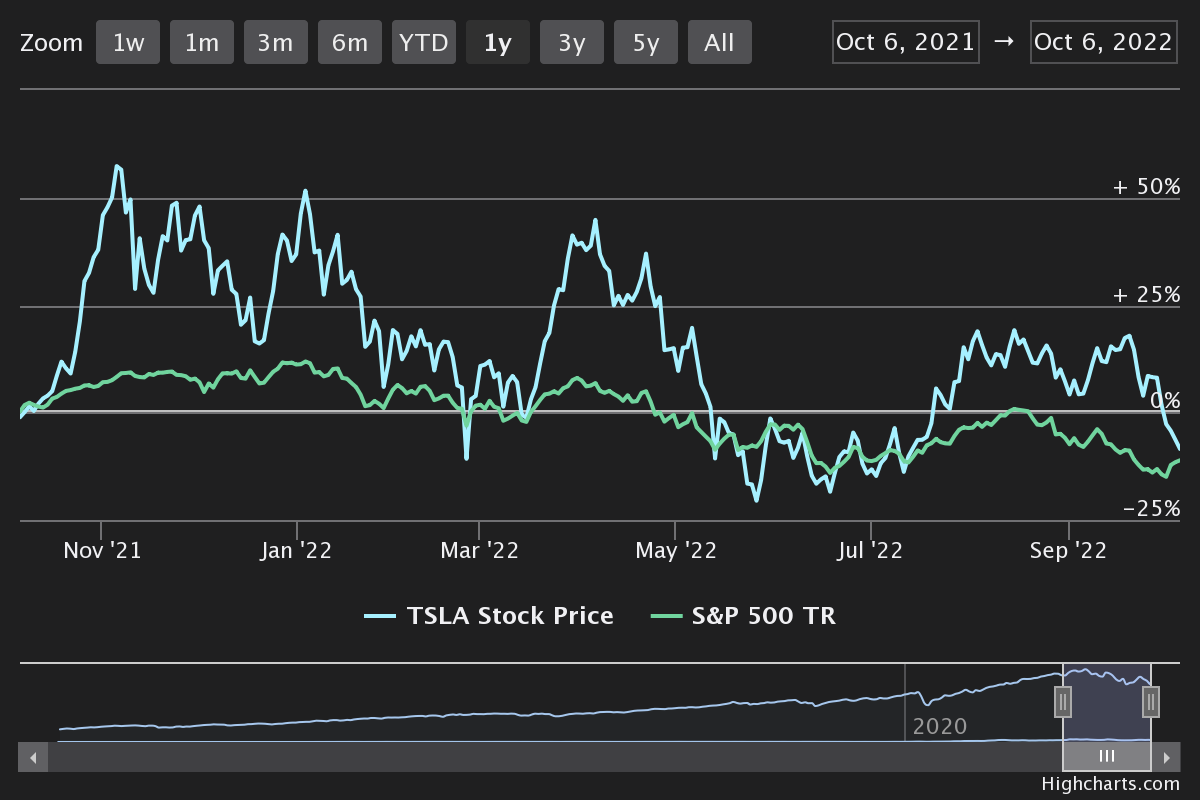
]]>daniel<![CDATA[Tesla’s Stock Slides In 2022 As Hedge Funds Sell]]>https://whalewisdom.com/articles/?p=26632022-10-10T09:21:28Z2022-10-10T09:21:27ZTesla, Inc. (TSLA) continues to see fluctuating growth, aligning closely in performance with the S&P 500 in early October 2022. Both Tesla and the S&P saw a loss of approximately 12% over the past year. Hedge funds were selling the stock, and Tesla slid on the WhaleWisdom HeatMap to a rank of eighteen from two.
Tesla is a multinational automotive and clean energy company that designs, develops, manufactures, and sells electric vehicles (EVs), energy generation products, and energy storage systems. Tesla has made its mark on the automotive industry, and the market for Tesla’s EVs continues to grow as a larger volume of consumers seek to lower their carbon footprint while also appreciating Tesla’s unique luxury vehicles. The company’s energy generation and storage business, run through its Tesla Energy subsidiary, has grown in 2022 despite market challenges.
Tesla has opened several new factories over the past two years, both nationally in the US and overseas, supporting manufacturing expansion and meeting the demand for its products. New factories in Texas and Germany represent some of the most significant new additions and produce lithium-ion batteries for EVs, among other energy devices. Tesla continues to see increased competition in the EV space. However, its investment in battery technology and overall efficiency continues to give them an advantage. Recent concerns in the news related to Tesla’s primary founder, Elon Musk’s, back-and-forth decisions about buying Twitter, Inc. Some investors have concerns about whether this purchase will require selling more Tesla shares. Over the past year, Tesla has also been negatively impacted by economic and political factors but continues to move forward with production and innovation.
Mixed Results from Hedge Funds and Institutions
Tesla saw mixed results during the 2022 second-quarter activity, and the aggregate 13F shares held by hedge funds decreased to about 165.9 million from 175.2 million, a decrease of approximately 5.3%. Of the hedge funds, 28 created new positions, 188 added, 50 exited, and 117 reduced their stakes. In contrast to hedge funds, institutions were buying. Overall, institutions increased their aggregate holdings by about 3.2% to approximately 1.34 billion from 1.29 billion. The 13F metrics between 2012 and 2022 are a good reflection of Tesla’s ability for growth despite a rocky path of upward mobility.
Analysts estimate that year-over-year increases will bring earnings to $5.86 per share by December 2023, up from December 2022’s predicted $4.31 earnings. Revenue estimates are also encouraging, expecting approximately $85.1 billion by December 2022 and a rise to about $120.0 billion by December 2023.
Analysts React to Missed Expectations
Analyst Ryan Brinkman of JPMorgan Chase & Co. kept an Underweight rating on shares and raised the firm’s price target on Tesla to $153 from $137. Even after Tesla’s third quarter (Q3) vehicle deliveries tracked below consensus estimates, Brinkman maintained his estimates. While Tesla expanded production capacity, some factory locations, such as the Shanghai plant, have continued to face shutdowns and delays related to Coronavirus lockdowns and restrictions. While Tesla has reported record delivery figures, the volume has not met consensus expectations, and there are concerns regarding demand. Oppenheimer & Co. Inc. analyst Colin Rusch acknowledged that the Q3 deliveries did not meet expectations but still advised that Tesla shares are a buy and is optimistic about fourth quarter (Q4) deliveries. Deutsche Bank’s analyst, Emmanuel Rosner, also reported Q3’s deliveries being shy of expectations and lowered his Q3 revenue and earnings forecasts.
Positive Outlook Ahead
While Tesla’s growth has slowed, revenue and earnings predictions through 2023 are encouraging. The company has taken measures to expand its manufacturing capacity and continues to innovate its clean energy solutions and expand its EV portfolio. Demand for Tesla’s products and solutions is likely to gain strength, especially with a long-term shift by consumers to electric vehicles. The stock’s trends suggest the company is still a buy for patient investors.